Monday, October 13, 2008

The Best Summary Of Marx, Ever


Let's take a break from posting incessantly about consumer electronics to talk some philosophy and political economy. Marx is actually not so bad to read once you try to write it yourself in English like a sensible person, so here goes...

Marx’s theories of political economy revolve largely around commodities, which are any objects that satisfy some human desire. Commodities have a dual nature as use-values and exchange-values. Use-value is the commodity’s direct ability to satisfy such desires via its application or consumption. Exchange-value is the commodity’s relative worth as compared to commodities of other kinds. This exchange-value is manifested in its monetary price. The exchange-value, being dependent on markets rather than pure usefulness, is unrelated to its worth as a use-value. A commodity exists in either of these forms and can be transformed from one to the other by the act of buying and selling. So long as it circulates among sellers, it remains an exchange-value, but when it is put to fulfill its natural function, it is then a use-value.

The main problem with capitalism according to Marx is that it estranges the worker from his labor. This is done in a number of ways. First of all, as the worker does not own the goods he produces, he is contributing more and more objects to a world that does not belong to him. Each object he creates which is not his expands the relative strength of the unattainable world in comparison to the world that is his.

The second kind of alienation relates to the motivation behind his labors. Under capitalism, the only motive for a worker to produce is his own survival, the challenges to which are forced upon him by external forces. Since he has no choice but to produce, his labor is essentially coerced and therefore does not belong to him but to the coercing forces. Rather than gaining things from his efforts, he gives his efforts to another and they are lost to him.

Another kind of alienation is loss of the worker’s human identity, or ‘species-being’. Marx says that man’s identity is completely tied to using the immaterial (labor) to convert ‘nature’ into objects. He makes the (somewhat dubious) claim that this transformation is man’s sole purpose in life. Since a man is alienated from his labor, he is subsequently alienated from his human identity.

The fourth kind of alienation Marx describes is the alienation between human beings. Because the worker loses his labors and his identity to an external master, who is necessarily another human being, he is naturally alienated from this master that takes so much from him.

Ultimately, the problem with alienation is not that it deprives men of goods and economic well-being (although this is important), but that it deprives a man of his humanity. A working man is essentially rendered a machine, devoid of the few things that can be said to truly belong to a person. The capitalist system forces a man to surrender his free will and his life activities, effectively enslaving him, with the important difference that at least slaves can claim to have a purpose and identity that belongs to them. Because of these deprivations, he argues, capitalism is the greatest form of exploitation.


This exploitation should be evident, he says, but it is obscured by a capitalist preoccupation he refers to as fetishism. Marx’s fetishism is the obsessive behavior by which members of a capitalist society measure everything in terms of money. Under capitalism, the cycles of life are understood by market forces that motivate the flow of capital and commodities, the most notable property of any object being its price on the market. Marx says that this outlook on economics and society is a fetish because it distracts from the true nature of the goods society depends on, namely the goods’ nature being the product of labor which is exploitative and alienating to the worker. This fetish allows the structure of the capitalist system to dictate the course of people’s lives.


Word.

The Semiotics of Blenders


You may be familiar with the popular internet video series “Will It Blend?” This series, an advertising campaign for Blendtec blenders, serves as a demonstration of the remarkable shredding power of these blenders. Dozens of these videos have been produced. Some of the items destroyed for the viewing pleasure of the internet public have included broomsticks, marbles, and even hockey pucks. There is no doubt that this company produces formidable blenders, and evidence of their prowess is available here.

Of course, their website is much more than a mere product demonstration. If that were the case, the destruction of a few sturdy objects would be quite enough to convince the audience of the blender’s technical merits. The real purpose for the prolific destructive acts of Blendtec founder Tom Dickson is to enhance their brand’s notoriety and increase sales. According to the unimpeachable information on the series’ Wikipedia page, the campaign was a resounding success resulting in a dramatic upturn in sales and even spawning a line of themed merchandise.

But I am not here to discuss blenders, I am here to talk about what gets blended. I was struck by Mr. Dickson’s choice of…victims? Tom Dickson is a man with his finger on the pulse of modern consumer society, as demonstrated not only by his success with viral video marketing , but also by the products which he destroys for maximum memorable effect. The footage from an episode in which he reduces a set of credit cards to dust could be seen as a biting comment on consumerism if it were put to other ends. In one episode he destroys a Guitar Hero controller, ostensibly because there were no Beach Boys songs in the game, but almost certainly because of the Guitar Hero series’ explosion to becoming a national entertainment phenomenon. He also destroys a copy of the video game Grand Theft Auto IV, rather pointless in terms of demonstrating a blender, because as we know all too well, disc-based media are ridiculously easy to break. Once again, the whole point was the destruction not of an object, but of a hyped object.

We could go on at length about Mr. Dickson’s expanding portfolio of differently colored powders, but instead I let’s look at one example and what it tells us about consumerism in the contemporary world. In one the most popular of all the episodes, our buddy Tom reduces the vaunted iPhone into a smoking cup of dust. The iPhone represents not merely an advance in telephony, but is also arguably the pinnacle of popular gadgetry (I risk here contradicting my previous blog post saying the same thing about the iPod.). At the time, a retail iPhone cost about $500. The blackened ashes of the iPhone that emerged from that blender sold for $901 on Ebay. A foul, essentially worthless mess of raw materials sold for more than the product of an extremely fine-tuned device crafted from a considerable investment of research and labor. Dickson may as well have just blended a copy of Karl Marx’s Capital and been done with it.

Those iPhone ashes sold at $901 both because of what they are and what they were. What they were, as I have said before, once a unit of a prized achievement of consumer society. Were he alive hundreds of years ago (and with a blender), Mr. Dickson would have blended tulip bulbs and Chinese porcelain.

What the ashes are now is an item of memorabilia, gaining this status from being the remains of the iPhone destroyed in front of millions. You could blend your own iPhone at home, and I assure you it will not increase in value. There can be only one “Will It Blend?” iPhone. In a culture where we partake of massively shared cultural experiences, possessing the physical manifestation of these memories is akin to owning a modern-day relic.

Quick Note

Heads up, if anybody is reading this, let it be known that publishing these posts is an arcane and mysterious art and I hereby renounce attempting to get the formatting right.

iPod Uber Alles


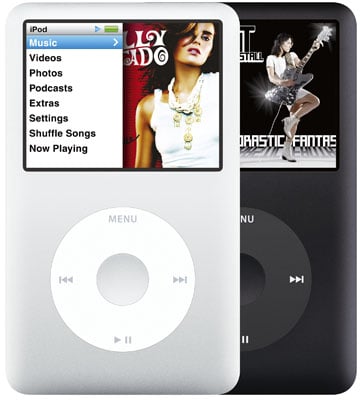
Apple’s iPod line of portable mp3 players is one of the most successful branding efforts of the decade. To many people, the terms “iPod” and “mp3 player” are synonymous. About a year ago I walked into a retirement home carrying a small new digital alarm clock for my grandmother. Along the way, my mother introduced me to numerous of my grandmother’s elderly friends, all of whom invariably asked if the clock I was holding was some kind of iPod. The iPod has in many ways become the epitome of technological consumerism.


The iPod’s dominance of the portable music player lexicon is unsurprising, as it stands almost unchallenged as the player of choice for today’s tech-savvy trend-followers. Searching through both retail stores such as Best Buy and Circuit City, as well as online vendors such as Amazon.com, reveals that there is in fact almost no competition to Apple’s ubiquitous product. Other companies do manufacture portable music players but none of these stand directly in competition with the iPod. These players are typically low-budget models with limited storage capacity and features. The fact that I have heard of none of these brands probably means they have little to no effective marketing, and are instead focusing on undercutting Apple through sales to shoppers who cannot afford or do not see the point in paying for Apple’s high-end models. In Apple’s field of high-priced, high-capacity, trendy music players, the only real competition is Microsoft’s Zune, a failing effort surviving on the strength of its mother company. Some would argue that this is a natural result of capitalism, namely the triumph of a superior product in a particular sector of the market. Perhaps this is the case, but I find it more interesting as a result of consumer capitalism and the triumph of the superior brand.


What are the three most notable characteristics of the iPod? I asked a number of my friends this question, and was amazed to find that all gave the same answers. First of all, they all said, it is a music player. True enough. It is interesting to note though that at least part of the perceived quality of the product is in its explicit functionality. Secondly, they said it was white, a remarkable claim considering that the iPod is now available in a whole rainbow of colors including black, blue, and pink. One of these friends owns a non-white iPod. This show’s the effectiveness of Apple’s long association with the color white, starting with their breakthrough styling on the iMac computer. Maybe also my friends were calling to mind years of advertising in which the iPod was depicted as a white shape strking out against black human silhouettes, the dynamic but faceless bodies that implied the energy of the device could be anybody’s. Finally, they all said that the iPod is “simple”. The simplicity they refer to is of course the iPod’s iconic control wheel, a single plastic wheel that can be both turned and pressed. While I would argue that the lack of differentiated controls is in fact confusing, I cannot avoid acknowledging the sleekness of the interface and the degree to which operating the iPod is like second nature to those that own it, while watching them struggle with my old non-Apple brick is quite amusing. Perhaps branding has even penetrated deep into our muscle memories?


The iPod has become its own industry, with literally hundreds of accessories designed for it by dozens of companies, iPod-specific docks appearing on a wide range of home electronics, and even direct iPod-specific connections being built into some automobiles. These products aren't made merely to facilitate the integration of portable music players with other devices, they are dependent on the success of the iPod and only the iPod. That a company and a product can be successful as the result of branding is nothing new to us, but the power of a brand to create an entire industry based on itself while preventing competing products from gaining any meaningful share of the market is a truly astounding feat of marketing.